Show summary Hide summary
- Why the soundtrack matters in Coppola’s reimagining
- Standout songs and the scenes they transform
- How needle drops signal rebellion and escape
- Classical cues: comedy, melancholy, and the theatrical court
- Production design, costumes, and camera craft that answer the playlist
- Diegetic music and social consequences within the story
- How Marie Antoinette reshaped the sound of period drama
Sofia Coppola’s Marie Antoinette rewired how modern music can shape a period film. By layering punk, post‑punk, indie rock and baroque textures, the director turned a royal biography into an intimate mood piece. The soundtrack does more than decorate scenes: it reveals desires, boredom, and rebellion inside a gilded cage.
Why the soundtrack matters in Coppola’s reimagining
Coppola chose pop and classical sounds to do narrative work. The music signals what Marie feels when dialogue can’t. It also frames the court as a theatrical stage where appearances matter more than agency.
IMAX explores sale: blockbuster shake-up for theaters and investors
Laser hair removal device lets you skip waxing: get smooth skin at home
Brian Reitzell, Coppola’s longtime music collaborator, assembled the record with a clear dramatic purpose. He didn’t pick hits for nostalgia alone. Each needle drop and baroque cue maps to a psychological beat.
The film’s initial Cannes reception was mixed. Critics called it fashionably distant and frivolous. Over time, audiences and scholars began to see the method behind the gloss.
Standout songs and the scenes they transform
- Gang of Four — “Natural’s Not in It”: Used in the opening credits, the song establishes the film’s ironic view of luxury and amusement.
- Bow Wow Wow — “Aphrodisiac,” “I Want Candy,” “Fools Rush In”: These tracks underscore Marie’s appetite for parties, flirtation, and the sugar rush of court life.
- The Strokes — “What Ever Happened?”: Plays during a hallway skip and a private reverie, linking teenage fantasy with Marie’s longing.
- New Order — “Ceremony”: Scores a montage that registers a brief triumph after Marie becomes queen.
- The Radio Dept. — “Pulling Our Weight”: Sets a tranquil picnic scene, a rare moment of autonomy.
- Aphex Twin — “Avril 14th”: A tender piano piece used to evoke quiet heartbreak when an affair ends.
- The Cure — “All Cats Are Grey”: The final modern song that haunts the film’s last smashed room and into credits.
- Roger Neill — “Concerto in G”: Light, almost comic strings that highlight the absurd rituals of court life.
- Dustin O’Halloran — “Opus 17” and “Opus 36”: Sparse piano cues that track Marie’s arrival in France and her later isolation.
How needle drops signal rebellion and escape
Modern pop songs appear when Marie carves out private moments. These needle drops act like secret doors.
When she moves through palace corridors to an indie anthem, the music creates a private soundtrack. It tells viewers she’s inside her own head. That contrast between public ritual and private longing is central.
Needle drops function as emotional shorthand. They compress feeling into a minute or two.
Classical cues: comedy, melancholy, and the theatrical court
Traditional music in the film often plays the opposite role. It underscores the public performance of monarchy. At times it reads as ridiculous.
- Light orchestral touches punctuate daily humiliations in the palace.
- Full baroque passages emphasize the performative nature of etiquette.
- Minimal piano themes register genuine sadness and loneliness.
Diegetic performances—musicians playing for the court—make those contrasts literal. When Marie claps at an opera, the music tracks how quickly public favor can shift.
Production design, costumes, and camera craft that answer the playlist
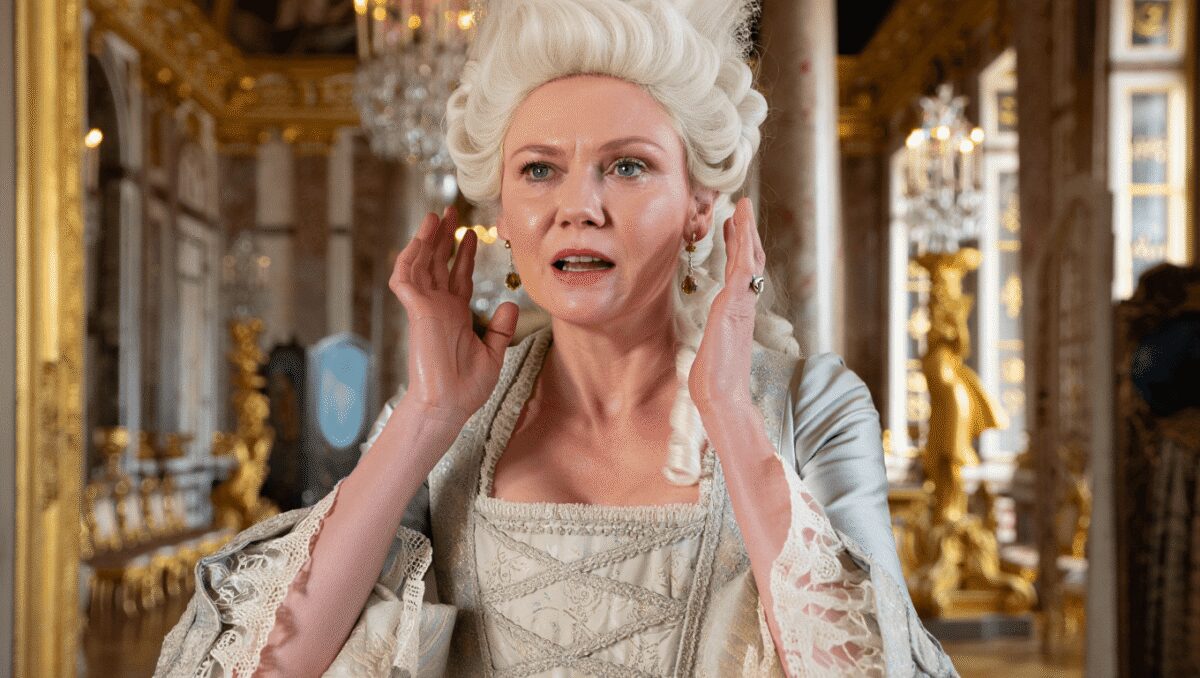
Milena Canonero’s Oscar-winning costumes, K.K. Barrett’s sets, and Lance Acord’s lensing all respond to the music. The soundtrack and visuals speak the same language.
Costumes become an extension of the score. A pastel gown, a powdered coiffure, or a strewn dressing table are visual riffs that the music echoes.
Sound and image work together to make the palace feel like a curated pop world. This is part of the film’s genius: it treats history as a mood board rather than a strict record.
Diegetic music and social consequences within the story
When musicians appear on screen, the film explores social codes. A court performance can lighten or tighten power dynamics.
- Early applause after Marie disrupts theater rules prompts communal imitation.
- Later, refusal to applaud signals social exile and reputational ruin.
The contrast shows how music can be both liberating and a meter of social judgment.
How Marie Antoinette reshaped the sound of period drama
Coppola’s approach opened a pathway for blending contemporary pop with historical settings. Television and film projects adopted similar techniques to make the past feel immediate.
Shows like Bridgerton and series such as Dickinson owe a debt to that approach. Filmmakers now test how pop songs can reveal character in anachronistic ways.
Coppola continued this method in other films, mixing era‑specific and modern sounds in titles like The Virgin Suicides and The Bling Ring. The tactic proved portable across stories about youth, fame, and confinement.
Why the soundtrack still matters for viewers and creators
For many viewers, the music is what lingers after the credits. It reframes Marie not only as a historical object but as a teenage spirit trapped by protocol.
For creators, the film remains a case study. It shows that anachronistic music can deepen character work when chosen with discipline.
New directors and music supervisors continue to borrow from Coppola’s playbook. They test where pop and period collide and how that collision can reveal interior life.