Show summary Hide summary
- How the live setting shapes the music
- The players and the roles they occupy
- Why repetition becomes invention here
- Standout moments: two extended tracks
- Engineering choices that matter
- How the music communicates joy and focus
- Where this record sits in contemporary jazz
- Questions the album leaves in the air
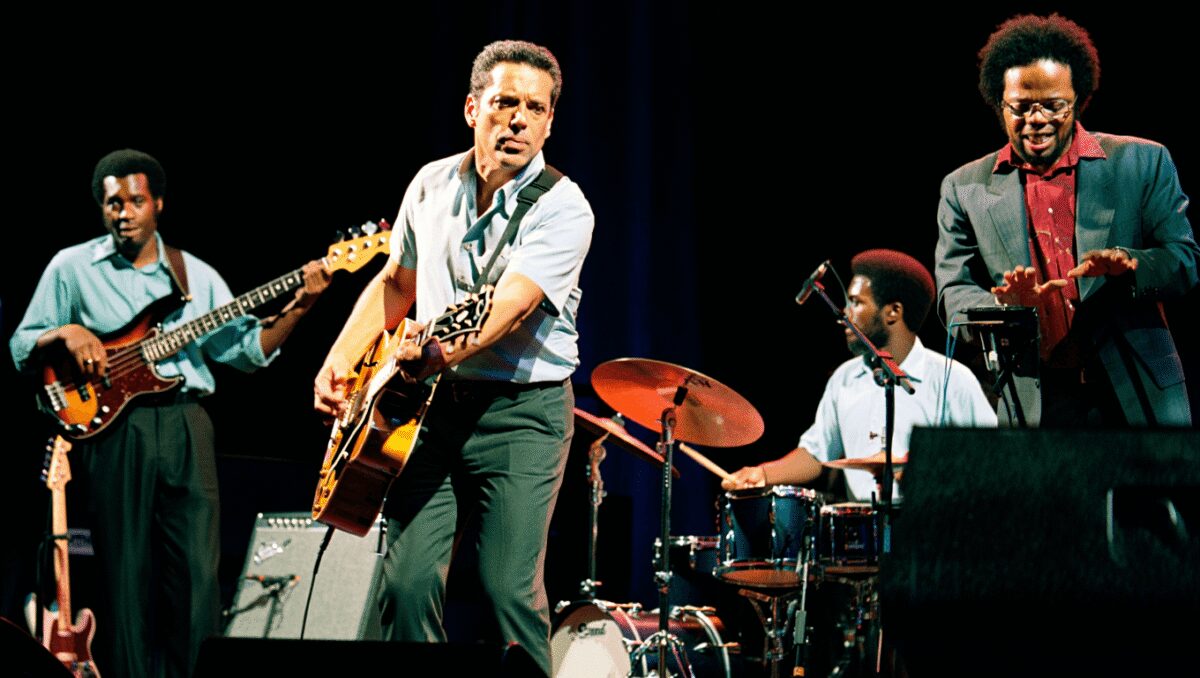
Jeff Parker’s new release with the ETA IVtet, Happy Today, feels like a private discovery turned public celebration. Recorded live in Los Angeles, the album captures a quartet in full sympathy — a band that breathes as one, shifts grooves without hesitation, and invites listeners into an improvisational conversation that never feels rehearsed. The result is warm, immediate, and oddly restorative: forty minutes of music that rewards close attention.
How the live setting shapes the music
The record was tracked at the Lodge Room in Highland Park. That venue’s larger, airier acoustics allow sound to expand in ways Parker’s earlier ETA nights could not. The band uses the room as a tool, letting reverberation color notes and spaces between phrases. Because the recording was made live, ambient noise and crowd response become part of the atmosphere. Whistles and shouts punctuate the music, reminding the listener that these moments were conjured in real time.
- Venue: Lodge Room, Highland Park, Los Angeles.
- Recording approach: Live performance captured to stereo tape.
- Effect: Airy, physical textures and a sense of presence.
Fiber gummies boost digestion and banish sluggishness: top Amazon pick
IMAX explores sale: blockbuster shake-up for theaters and investors
The players and the roles they occupy
ETA IVtet is a collective with clear roles that blur in practice. Jeff Parker leads from the guitar but often steps back to let the ensemble breathe. Anna Butterss anchors with bass lines that evolve into motifs. Josh Johnson’s alto sax weaves long, haunting phrases. Jay Bellerose supplies rhythmic color rather than mere timekeeping.
- Jeff Parker — guitar, melodic architect and improviser.
- Anna Butterss — bass, groove and harmonic foundation.
- Josh Johnson — alto sax, lyrical and atmospheric lines.
- Jay Bellerose — drums, textural and dynamic propulsion.
The band operates like a single organism. Each musician knows when to lead and when to yield. That mutual trust is central to the music’s intensity.
Why repetition becomes invention here
Repetition in these performances is not trance by default. Instead, it acts as scaffolding. Short melodic cells and rhythmic loops return and mutate. The players fold sound onto itself until new shapes emerge. Electronics and subtle looping are tools for exploration, not crutches. Moments that might read as static in lesser hands become launching pads for delicate transformations.
Elements of their repeated structures
- Looped bass and drum grooves that evolve over minutes.
- Guitar motifs that rise, fall, and return with variations.
- Saxophone lines that echo and harmonize with themselves.
Standout moments: two extended tracks
Happy Today contains just two long pieces. That format gives each idea room to grow. The opener unfolds slowly, allowing the first notes to settle and reverberate. The title track builds differently, using layered parts and recorded loops to reach a euphoric close.
“Like Swimwear” — patient unfolding
The first track begins with a simple guitar pattern that repeats long enough to let the room absorb it. Bass and drums enter deliberately, widening the sonic field. When the sax arrives, the piece lifts. There are mid-track shifts where the drummer alters the pulse and the group relocates the groove. These transitions feel organic because each player reacts with restraint and curiosity.
“Happy Today” — communal uplift
The album’s namesake leans into layered textures. Here, Johnson harmonizes with a looped line of his own playing, creating a chorus of saxophones that fizzes behind Parker’s agile guitar. The closing sections are buoyant, with the band moving in tight agreement toward a bright, emphatic ending that still leaves space to breathe.
Engineering choices that matter
Bryce Gonzales’ role as engineer is palpable throughout the record. He recorded to a Nagra stereo tape machine, which imparts a tactile grain to the sound. The tape’s saturation and the live mix contribute to a feeling of immediacy. Instruments have weight; transient attacks strike with clarity. In several places, the drums cut through with a crispness that redraws the arrangement’s edges.
Gonzales balances warmth and clarity. That balance keeps solo lines intimate without losing the ensemble’s breadth.
How the music communicates joy and focus
Parker has called this record a statement of joy. That description is literal in its spirit and constructive in its method. The band’s joy comes from concentrated listening, not from showmanship. The performances reveal a commitment to careful attention: each musician responds to small gestures and lets those gestures reroute the collective conversation.
- Joy as collective risk-taking rather than overt celebration.
- Attention as an active, audible practice.
- Improvisation that rewards repeat listening with new details.
Where this record sits in contemporary jazz
Happy Today feels both rooted and forward-looking. It draws on the lineage of small-group jazz improvisation but embraces modern textures and live recording techniques. Fans of Parker and listeners who favor exploratory, groove-oriented music will find much to admire. The record also stands as an example of how live documentation can preserve the electricity of a performance without sterilizing it.
Questions the album leaves in the air
Rather than resolve every tension, the two tracks often soften into space. Endings are gentle exhalations rather than dramatic closures. That choice suggests an ongoing conversation — the music doesn’t claim to finish anything. It simply opens a window.
- What new directions might Parker and ETA IVtet take after this live statement?
- How will listeners reinterpret these sessions after repeated plays?
- Which moments in the live room will become reference points in future performances?